
Online Therapy for Foster and Adoptive Parents in Irvine, CA
Therapy for adoptive parents carrying the weight of parenting that no one prepared you for. Serving Irvine, Tustin, Lake Forest, Mission Viejo, and surrounding Orange County communities.
Body-Based Trauma Therapy for Parents Walking the Foster and Adoption Journey in Orange County
You're an Orange County adoptive parent who prepared for everything: the home study, the waiting, the uncertainty. You read every book, joined every support group, watched every documentary about adoption.
But no one prepared you for this: the weight of a failed adoption that left you grieving a child who was never legally yours, the depression that showed up after your child finally came home when you were supposed to feel nothing but joy, the way your body goes into panic mode during your child's meltdowns with your heart racing like you're in actual danger.
You're exhausted in a way that sleep doesn't fix. Your chest stays tight. Your shoulders live up by your ears. You cry in your car before walking into the house because you need to pull it together before your child sees you.
And the shame of struggling when you “got what you wanted” makes it all worse.
Learn more about my approach to working with adoptive parents here.
How therapy works for adoptive parents

You've probably read every book, taken every training, and tried every parenting strategy the adoption community recommends. You understand why your child hides food in her pillowcase, why he flinches when you raise your voice even though you've never given him a reason to, why bedtime turns into a battle every single night. You have the knowledge, and you're still losing it at 7pm when nothing you've learned seems to work on a child who's screaming that you're not their real parent.
The gap between what you know and what you can do in those moments isn't about effort or education. When your child melts down and your heart starts pounding and your thinking brain goes offline, your body is reacting to months or years of living in crisis mode. You've been absorbing your child's distress day after day, and your brain has started treating every escalation as an emergency, responding before you have a chance to choose how you want to show up.
That's where my work focuses. The therapeutic approaches I use work directly with how your body responds to stress, so the parenting tools you already have can function the way they're supposed to. You won't need to spend weeks retelling your story or narrating every hard moment from the beginning. Much of this work happens at the level of the physical stress response, the racing heart, the tight jaw, the urge to shut down or yell or walk away, and helps it shift so you can stay present when things get hard at home.
I spent nine years working in child welfare and adoption before becoming a therapist. I sat in placement meetings, reviewed case files, and worked alongside families from the very first day a child came home. That means I already understand what food hoarding means, why the anniversary of a placement can bring everything rushing back, and how exhausting it is to love a child who tests your relationship every day because testing is the only way they've ever learned to figure out if someone will stay. So when you describe what's happening in your house, you can go straight to what you need help with.
What changes with specialized, adoption-competent therapy

You'll get through bedtime without dreading it for three hours beforehand. Right now the whole evening is shaped by what's coming. You start tensing up after dinner, bracing for the negotiation, the stalling, the crying, the part where your child says something that hits you right in the chest and you either snap or go numb. After this work, bedtime will still be hard some nights, but your body won't start the countdown at 4pm. You'll walk into their room and handle what comes without the whole night hinging on whether it goes well.
You'll stop going through the motions and start being in the room. There's a version of parenting where you're physically present but emotionally somewhere else, making lunches on autopilot, driving to soccer practice without remembering the drive, sitting next to your child on the couch while your mind runs through everything that went wrong today and everything that could go wrong tomorrow. When the numbness starts to lift, you'll catch yourself laughing at something your kid said and realize you weren't forcing it. You'll notice the weight of their head on your shoulder and feel something warm instead of nothing at all.
You'll ask for help without the voice in your head telling you it proves you shouldn't have done this. There's a specific kind of shame that belongs to adoptive parents, the kind that says you signed up for this, you were evaluated and approved, you told everyone how ready you were, and now you're drowning. That shame keeps you quiet when you should be asking for support. When it loosens its grip, you'll call your sister and say you need a night off without rehearsing the justification first. You'll tell your partner the truth about how your day went instead of the edited version. You'll walk into the IEP meeting as your child's advocate instead of as someone trying to prove they deserve to be a parent.
You'll hold the grief about the family you pictured without it coloring everything else. Maybe the grief is about the biological child you couldn't have, or the fantasy of what adoption would look like versus what it looks like, or the relationship with your child that you imagined during the home study that doesn't match reality. You'll feel that sadness when it comes without it leaking into the rest of your day. A hard morning won't become a hard week. You'll sit with the feelings when they surface and still be present for your child's school play that evening instead of watching it through a fog.
You'll wake up without the dread already waiting for you. Right now your first conscious thought most mornings is some version of "what's today going to bring" and your body answers before your mind does, tight shoulders, clenched jaw, heart already running faster than it should be at 6am. After this work, you'll open your eyes and have a few seconds of quiet before the day starts. You'll pour your coffee and drink it while it's still hot. You'll have enough in the tank by the end of the day to read a chapter of something you chose for yourself instead of collapsing into your phone.
You'll make decisions about your own life without guilt telling you it's selfish. Somewhere along the way you stopped being a person with your own interests and became a full-time crisis manager. You used to have friends you saw regularly, a career you cared about, things you did on weekends that had nothing to do with parenting. After this work, you'll sign up for the thing you've been putting off, keep the dinner plans you made, and say yes to the work opportunity without the constant background calculation of whether wanting something for yourself takes something from your child.
You'll notice the good moments instead of just surviving the hard ones. Right now the hard moments are so consuming that the good ones barely register, or they register and you immediately brace for whatever's coming next because the good stretches never seem to last. When your body learns that it doesn't have to stay on high alert every minute of the day, you'll catch a quiet moment with your child and just be in it. Saturday morning pancakes will feel like Saturday morning pancakes instead of the calm before the next storm.

Specialized adoption therapy for adoptive & foster parents in Irvine and throughout Orange County
Online adoption therapy in Irvine, CA, including Tustin, Lake Forest, Mission Viejo, Laguna Niguel, Newport Beach, Costa Mesa, Aliso Viejo, Rancho Santa Margarita, San Clemente, and communities throughout Orange County and all of California.
Meet Summer
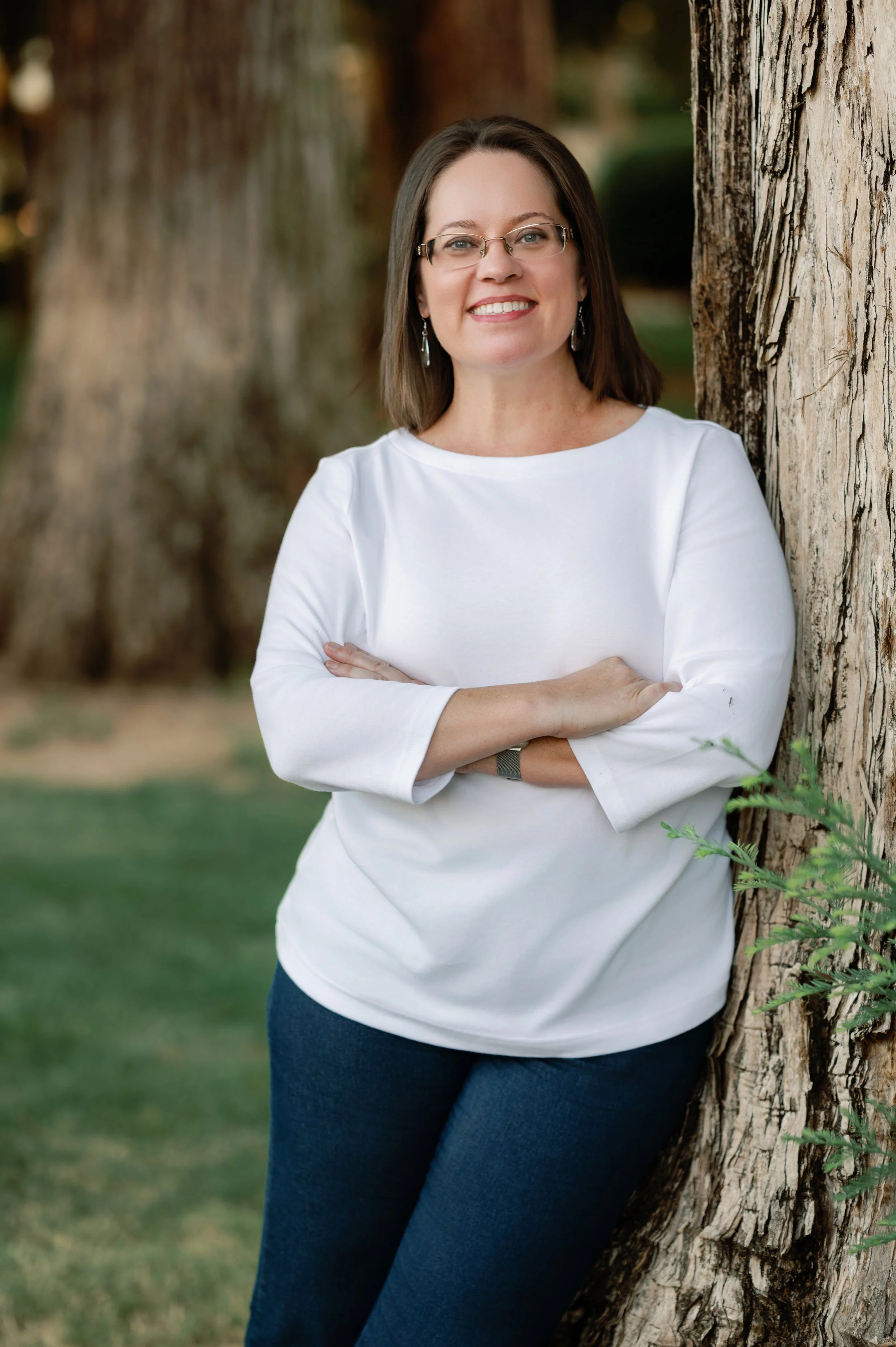
I'm Summer Verhines, LCSW (California LCSW #68507).
I work with adoptive parents throughout Irvine and Orange County because I understand that adoption doesn't just affect your child, it profoundly impacts you.
I’ve been licensed to independently practice in California since 2015. I have 9 years of experience in child welfare and adoption and I am C.A.S.E. registered (Center for Adoption Support and Education) with training completed through the National Adoption Competency Mental Health Training Initiative (NTI).
I specialize in supporting adoptive parents through their own mental health challenges: post-adoption depression, secondary trauma, and the grief and burnout that comes with this journey.
Using specialized trauma approaches, I help you heal from failed adoptions, process your own trauma responses, and find sustainable ways to manage the ongoing stress without losing yourself in the process.

Therapy Services Offered
Individual Weekly Therapy
Weekly therapy with me is a steady, collaborative space where you don’t have to perform, explain everything perfectly, or rush toward solutions. We’ll move at a pace that respects your nervous system, blending thoughtful conversation with evidence-based trauma approaches when helpful, so insight and relief can happen together. Some weeks may feel reflective and grounding, others more active and processing-focused—but always intentional and contained. Over time, clients often notice they feel more regulated, more confident in their responses, and less controlled by patterns that once felt automatic.
Intensives
Therapy intensives are longer, focused sessions designed to help you go deeper without the stop-and-start feeling of weekly therapy. In a 2- or 4-hour intensive, we create a carefully paced container that allows time for assessment, preparation, processing, and grounding—without rushing your system. These sessions often incorporate trauma-focused modalities such as EMDR, Brainspotting, IFS, or somatic work, with built-in breaks and regulation throughout. Clients often choose intensives when they want meaningful movement around a specific issue or feel ready for concentrated, intentional healing work. Learn more about intensives here.
Logistics
50-minute Sessions are $250.
I also offer 90-minute sessions for $375 and intensive sessions (2-6 hours) ranging from $500 to $1500 for people who want to work intensively.
I don't take insurance directly, but I can provide superbills for out-of-network reimbursement if your plan covers that.
I am available early mornings, evenings, and weekends. I provide services online only.

Self-Schedule or Contact Me Below
For the quickest and most confidential option, you’re encouraged to book directly into my calendar by clicking the Self-Schedule Here button below. That button will take you to my HIPAA-compliant calendar where you may request an appointment. Once I confirm your appointment request (typically within 24 hours), I will email you the new client forms to digitally sign. Then, we will meet on your scheduled day.
If you have questions prior to scheduling, you can also use the contact form below, and I’ll reply within 48 business hours. If you don’t see a reply, please check your junk/spam folder.
I look forward to hearing from you!
— Summer Verhines, LCSW
Contact Summer
Frequently Asked Questions
-
All sessions are conducted online via secure telehealth. You can meet with me from anywhere in California, including from your home, your car during lunch break, or any private space with internet access. This means Irvine parents don't need to add commute time to an already packed schedule.
-
Regular talk therapy focuses on understanding your thoughts and feelings, which can help, but often isn't enough when trauma or burnout are involved. I use specialized approaches like EMDR, Brainspotting, and Accelerated Resolution Therapy that work directly with your nervous system to release trauma at a deeper level.
-
It depends on what you're working on and which approach we use. Accelerated Resolution Therapy (ART) is designed to be short-term (1-5 sessions), and many parents feel significant relief within as little as one session when working on specific traumatic memories like a failed adoption. Other parents prefer to work through multiple layers of adoption-related trauma over several months. Traditional talk therapy can take 6+ months to see results. The body-based approaches I use are much more efficient. We'll discuss your goals in our first session and create a realistic timeline.
-
You don't need to have finalized your adoption to work with me. I support adoptive parents at every stage: waiting for a match, supporting a birth mother during pregnancy, navigating a failed placement, in the middle of foster-to-adopt uncertainty, or years into parenting.
-
I'm a private-pay provider and don't take insurance directly. However, I can provide documentation (Superbills) for out-of-network reimbursement if your insurance plan offers it. Many adoptive parents find that investing in specialized trauma therapy saves them years of ineffective talk therapy that insurance would cover but doesn't actually help.