
Online Therapy for Infertility & Pregnancy Loss in California
Online grief and trauma therapy for infertility, miscarriage, stillbirth, and TFMR
Serving Adults Throughout California via Secure Telehealth
Grief and trauma therapy for miscarriage, IVF loss, stillbirth, and TFMR across California
You told your partner you needed a minute, and then you sat in the car in the parking garage at the fertility clinic for forty-five minutes. The nurse had just walked through what a third failed IVF cycle means. She was kind about it, said all the right things.
But you’re staring at the steering wheel, and you can’t figure out how to turn the car on, because starting the car means driving home, and driving home means walking through the door where the nursery was supposed to be the second bedroom, and you don’t know how to keep doing this.
Or maybe you did get pregnant. Maybe you saw the heartbeat at eight weeks and told your parents and started thinking about names. And then at the twelve-week scan, the screen went quiet.
That was three months ago, and you went back to work after a week because there was no bereavement leave for a loss nobody else seems to think counts. Now your coworker is pregnant, and you spend your lunch break in the bathroom trying to get your breathing under control.
Or maybe you carried your baby for twenty weeks, fell in love with the kicks, and then the genetic test came back with results that changed everything. You made the hardest decision of your life, and now you’re carrying the grief of that decision in a world where half the people you know would judge you for making it, and the other half don’t even know it happened.
Whatever brought you here, the grief you’re dealing with is specific. The therapy you need has to be specific, too.
Specialized therapy for infertility and pregnancy loss grief

The grief from infertility and pregnancy loss doesn’t follow normal grief rules. You might be grieving something you never had, or something you held for weeks before it was taken. Either way, the people around you don’t always know what to do with it.
You’ve probably already tried to deal with this on your own. You went back to work, told yourself to be grateful for what you have, scrolled through forums at 2 a.m. looking for someone whose story sounded like yours.
Maybe you tried therapy. Your therapist was kind, and you liked them, but the sessions felt like talking in circles. You’d describe what happened, they’d reflect it back, and you’d leave feeling heard but not different. The nightmares didn’t stop, the tension in your shoulders didn’t let up, and you still couldn’t drive past the clinic without your hands gripping the wheel.
That’s because this kind of grief often goes deeper than what talk therapy can reach. The hormone injections, the two-week waits, the phone calls that start with “I’m sorry,” the physical experience of miscarriage or stillbirth or TFMR, all of that registers in your nervous system.
Your body learned that hope is dangerous, and now it’s stuck in protection mode.
That shows up in your daily life as anxiety that takes over your whole day, tension that won’t release no matter how many baths you take, and a feeling of being disconnected from the parts of your life that used to matter to you.
You avoid baby showers, scroll past pregnancy announcements, and you’ve stopped making plans because you don’t have the energy to follow through, and then you feel guilty about that too.
Body-based trauma therapy, the kind I use, works with the nervous system directly instead of asking you to think your way through it. The grief doesn’t disappear, but it stops controlling your body, your sleep, your ability to function, and your capacity to want things for your life again.
Your life can change after infertility and pregnancy loss grief counseling
You wake up on a Saturday, and your first thought isn’t about pregnancy, miscarriage, or fertility treatment. You think about going out for coffee, or the book on your nightstand, or the fact that it’s supposed to be warm enough to eat outside. The grief is still there, but you also are able to feel real hope and joy.
Your coworker announces her pregnancy, and you feel a mix of longing and sadness, but it passes. You say congratulations and you mean it. You don’t spend the next day replaying the announcement, or hating yourself for how you reacted.
You start thinking about what you want your life to look like, and not just the version that revolves around trying to get pregnant. You sign up for the Meetup group, or you book the trip, or you just stop canceling plans every weekend because you don’t have the energy.
A friend asks how you’re doing and you get to choose how much to share. You say “it’s been hard” or you tell the whole story, and either way, you don’t fall apart afterward. You go home, make dinner, watch something on TV. The conversation didn’t cost you the rest of your evening.
You get dressed in the morning and your body doesn’t feel like the enemy. You’ve stopped feeling betrayed by what it didn’t do, and you can look in the mirror with appreciation for how far it’s brought you.
You make a decision about next steps, whether that’s trying again, pursuing a different path, or choosing a life that doesn’t include parenthood, and the decision feels like yours. You sleep well that night because you trust yourself to handle whatever comes next.

Why online therapy works for infertility and pregnancy loss in California

Finding a therapist in California who specializes in reproductive grief and trauma can mean searching for months. Online therapy removes that barrier entirely.
Whether you live in San Diego, Redding, Bakersfield, or anywhere between, you can work with me from wherever you are.
If you’re in the middle of IVF treatment, your schedule is already dictated by monitoring appointments and medication timing. Online sessions mean you can have therapy from your living room on a day when you’re exhausted from a retrieval.
If you’ve just experienced a loss, you don’t have to sit in a waiting room next to someone who might be pregnant.
If you’re navigating a TFMR, privacy matters, and telehealth gives you that.
I provide infertility and pregnancy loss therapy to California residents in every part of the state through secure telehealth.
Online Infertility and Pregnancy Loss Therapy Across California
I provide infertility and pregnancy loss therapy to California residents in every part of the state through secure telehealth. No matter where you live in California, you can access specialized trauma therapy from a private space in your home, your office, or anywhere you have a stable internet connection.
San Francisco Bay Area
For clients in the East Bay and Tri-Valley, San Jose, Oakland, Palo Alto, Walnut Creek, Fremont, Berkeley, Mountain View, Sunnyvale, Santa Clara, and surrounding communities throughout the Bay Area and Silicon Valley.
Central Coast and Beyond
I also work with clients in Santa Barbara, San Luis Obispo, Bakersfield, Ventura, and rural communities across California where therapists who specialize in reproductive loss are not available locally.
Southern California
I work with clients in Los Angeles, Irvine, San Diego, Pasadena, Long Beach, Santa Monica, Torrance, Newport Beach, Carlsbad, Temecula, Riverside, Rancho Cucamonga, and communities throughout Orange County, the Inland Empire, and San Diego County.
Sacramento and Northern California
For clients in Sacramento, Roseville, Elk Grove, Folsom, Davis, El Dorado Hills, Stockton, Modesto, Fresno, Redding, and communities throughout the Sacramento Valley, Central Valley, and Northern California.
Hello! I’m Summer
California therapist for pregnancy loss and infertility
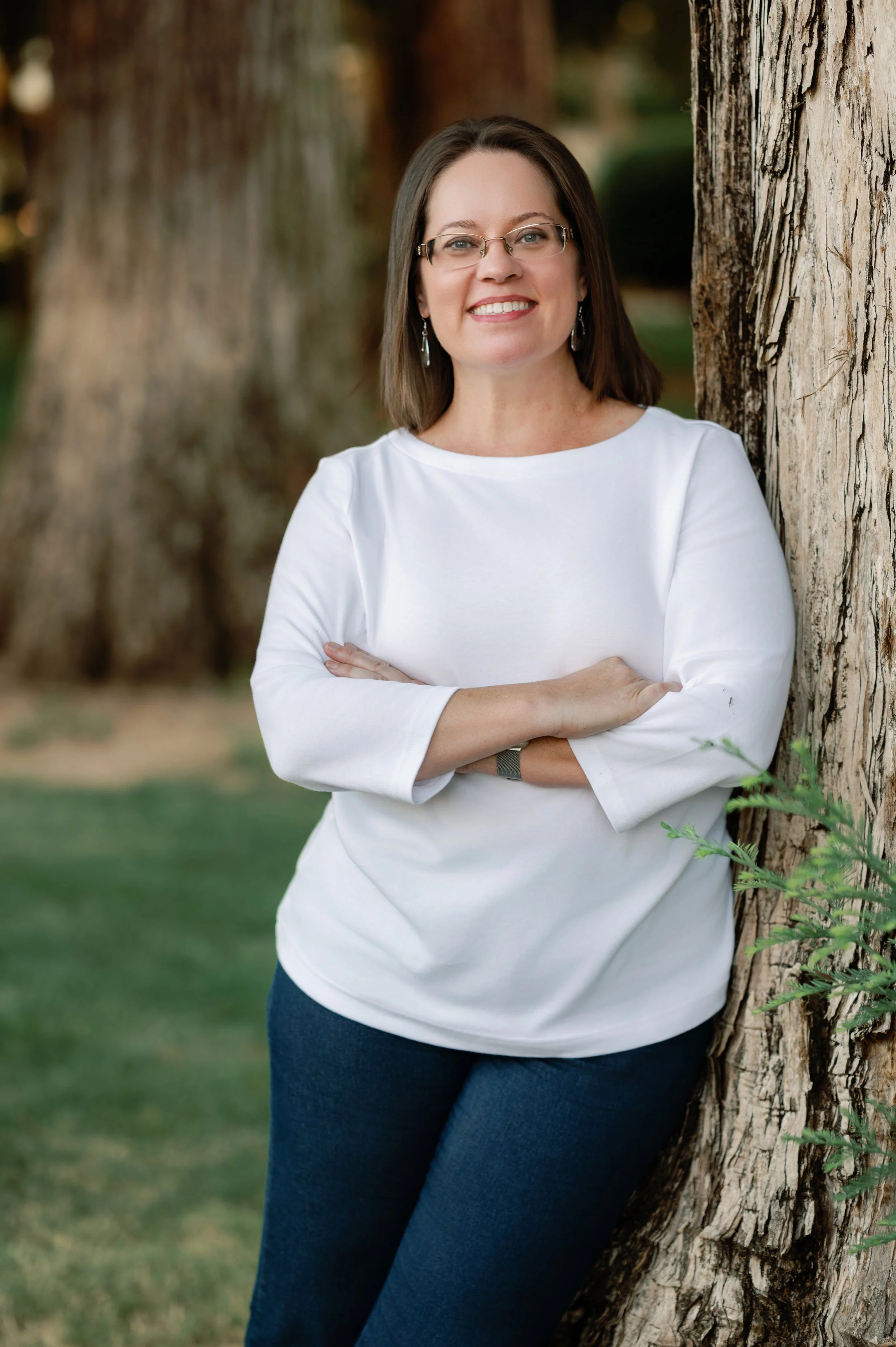
I'm Summer Verhines, LCSW (California LCSW #68507).
Before becoming a therapist, I spent nine years in child welfare and adoption. That work gave me a close-up view of how our experiences show up in the body, not just the mind, which is why standard talk therapy alone often doesn’t bring the long-term healing clients are looking for.
That led me to specialize in body-based approaches: EMDR, Brainspotting, and Accelerated Resolution Therapy (ART). These work directly with how your brain and nervous system stored the experience and help your body stop reacting as if the crisis is still happening.
I work with people navigating IVF, miscarriage, stillbirth, TFMR, and the layered grief that comes when several of these happen in sequence.

Therapy Services Offered
Individual Weekly Therapy
Weekly therapy with me is a steady, collaborative space where you don’t have to perform, explain everything perfectly, or rush toward solutions. We’ll move at a pace that respects your nervous system, blending thoughtful conversation with evidence-based trauma approaches when helpful, so insight and relief can happen together. Some weeks may feel reflective and grounding, others more active and processing-focused—but always intentional and contained. Over time, clients often notice they feel more regulated, more confident in their responses, and less controlled by patterns that once felt automatic.
Intensives
Therapy intensives are longer, focused sessions designed to help you go deeper without the stop-and-start feeling of weekly therapy. In a 2- or 4-hour intensive, we create a carefully paced container that allows time for assessment, preparation, processing, and grounding—without rushing your system. These sessions often incorporate trauma-focused modalities such as EMDR, Brainspotting, IFS, or somatic work, with built-in breaks and regulation throughout. Clients often choose intensives when they want meaningful movement around a specific issue or feel ready for concentrated, intentional healing work. Learn more about intensives here.
Logistics
50-minute Sessions are $250.
I also offer 90-minute sessions for $375 and intensive sessions (2-6 hours) ranging from $500 to $1500 for people who want to work intensively.
I don't take insurance directly, but I can provide superbills for out-of-network reimbursement if your plan covers that.
I am available early mornings, evenings, and weekends. I provide services online only.

Self-Schedule or Contact Me Below
For the quickest and most confidential option, you’re encouraged to book directly into my calendar by clicking the Self-Schedule Here button below. That button will take you to my HIPAA-compliant calendar where you may request an appointment. Once I confirm your appointment request (typically within 24 hours), I will email you the new client forms to digitally sign. Then, we will meet on your scheduled day.
If you have questions prior to scheduling, you can also use the contact form below, and I’ll reply within 48 business hours. If you don’t see a reply, please check your junk/spam folder.
I look forward to hearing from you!
— Summer Verhines, LCSW
Contact Summer
Frequently Asked Questions
-
Most therapists have basic grief training. What many don’t have is training in how reproductive trauma affects the body and nervous system.
The tightness in your chest, the nightmares, or the way you flinch during routine medical appointments are trauma responses that need trauma treatment.
-
They’re different from traditional talk therapy. Instead of narrating your experience in detail, you focus on a specific memory or sensation while I guide your brain through a processing technique, which might involve eye movements, focused attention on a body sensation, or guided visualization.
Most clients describe it as feeling like the memory is still there afterward, but the emotional intensity has dropped. You can think about what happened without your whole body reacting.
-
Some clients come in with a single loss and make significant progress in jut a handful (5-8) sessions.
Others come in with years of accumulated trauma, multiple losses, or layered grief, and the work takes six months to a year.
-
The first session is about understanding your full picture. I'll ask about your history and how the loss or infertility is affecting your daily life right now. What does your sleep look like? How are things with your partner? Are you experiencing physical symptoms like jaw clenching, stomach pain, or chest tightness? I'm listening for how the trauma is showing up in your body and routines, because that tells me where to focus treatment. You don't need to share every detail of your loss in the first session if you're not ready.
-
Many of my clients come to me after multiple types of loss. Maybe you had three failed IVF cycles, then got pregnant and miscarried, then had to make a TFMR decision. Or maybe you experienced a stillbirth after years of infertility treatment and now you're weighing whether to try again or pursue adoption. I work with layered loss regularly. The body-based approaches I use address each layer without overwhelming you. We don't process everything at once. We work through it piece by piece, and each piece that resolves gives you more capacity for the rest.
-
I charge $250 per session. I'm a private-pay practice, which means I don't bill insurance directly. I do provide superbills, which are detailed receipts you can submit to your insurance for potential out-of-network reimbursement. The amount you get back depends on your specific plan. I'd recommend calling the number on the back of your insurance card and asking about your out-of-network mental health benefits before your first session.
-
I’m licensed in California, Maryland, and Idaho, and all sessions are online.