
Online Therapy for Adult Adoptees
For adult adoptees sorting through identity, relationships, reunion, and grief
Throughout all of California, Idaho, & Maryland via Secure Telehealth
You’ve spent your whole life with questions other people never have to ask.
Who do I look like? Where did my anxiety come from– nature or nurture? Why do I feel like something is missing when I have a good life? Why does Mother’s Day feel so complicated? Should I search for my birth family, and what happens if I do?
Maybe you've pushed these questions down for years, telling yourself adoption was a non-issue because you had a good childhood. Or maybe you've always known it affected you, but nobody around you seemed to understand why.
Then something shifted…
Maybe you became a parent yourself, and looking at your baby's face (the first genetic relative you've ever seen) cracked something open you didn't expect. Maybe your adoptive parent died, and suddenly you feel an urgency to find answers before it's too late. Maybe a relationship ended and your partner said something about you “always waiting to be abandoned.”
Or maybe it's specifically about your birth family: whether to search, what to do with DNA results, or how to navigate a reunion that’s already underway.
Search, Reunion, and DNA Discoveries
For many adult adoptees, questions about birth family simmer in the background for years until something brings them to the surface: a health scare that makes medical history suddenly urgent, a DNA test taken on a whim that returns unexpected matches, an adoptive parent's death that removes the guilt barrier, or simply reaching an age where the questions feel too heavy to keep carrying alone.
-
The decision can feel difficult. Part of you wants to know, and part of you is terrified of what you'll find or won't find. You might worry about hurting your adoptive parents, opening a door you can't close, or discovering that your birth family has no interest in knowing you.
Meanwhile, everyone has opinions. Your adoptive family may feel threatened, friends who aren't adopted give you unsolicited advice, and your own feelings change day to day, sometimes hour to hour.
Working through the emotions tangled up in this decision helps you choose from clarity rather than fear or pressure, and whatever you decide, you won't spend years second-guessing yourself.
-
Reunion is rarely what people expect. The fantasy version, where you meet and instantly feel whole, almost never matches reality.
Instead, there's often an intense honeymoon period followed by complicated feelings: grief for the years lost, anger you didn't anticipate, disappointment when biological relatives turn out to be ordinary or difficult people, guilt about your adoptive family's reaction, and confusion about what kind of relationship you actually want with someone who is both a stranger and family.
Some reunions go well, some end in rejection, and many land somewhere in the middle with awkward boundaries and unspoken expectations.
Wherever yours falls, having space to process what’s happening and how you feel – rather than what you think you should feel – makes it easier to figure out what you want and ask for it.
-
Maybe you took an Ancestry or 23andMe test expecting percentages and got a half-sibling instead. Maybe you discovered the parent who raised you isn't biologically related to you. Maybe you found out your birth story wasn't what you were told.
DNA surprises are a specific kind of shock where the ground shifts under you, everything you thought you knew gets called into question, and sometimes the people involved are still in your daily life.
You might feel pressure to reach out immediately or pressure to pretend it doesn't matter, and you're supposed to figure out what you want while you're still reeling.
-
Rejection happens. Sometimes a biological relative doesn't respond, sometimes they respond once and disappear, and sometimes you meet and realize you don't actually like each other or that their version of your story is completely different from what you were told.
These outcomes carry their own grief, often compounded by shame about feeling unwanted twice or confusion about whether you're allowed to feel this bad about losing someone you never really had.
Processing that grief keeps it from running the show elsewhere, like cutting off your adoptive family in anger that's really meant for someone else, or reaching out again and again to a biological relative who's made it clear they're not interested, hoping this time will be different.

Wherever you are in this process — weighing whether to search, managing a complicated reunion, still reeling from a DNA surprise, or watching adoption questions resurface because you just had a baby or ended a relationship — you've probably already looked for help. And what you found either didn't fit or only got you so far.
You’ve been working on this longer than people realize

You’ve sat in a therapist’s office and tried to explain why adoption still affects you at 35, only to get a well-meaning response about how lucky you were to have loving parents. Or maybe the opposite happened: you mentioned adoption and suddenly everything in your life got filtered through a trauma lens that didn’t feel like it fit either. Either way, you walked out carrying the same stuff you walked in with, plus the new frustration of not being understood.
You’ve learned which topics make the room go quiet. Maybe you brought up your birth family once and watched your adoptive mom’s face change, so you never did it again. Maybe your partner listens but doesn’t really get why a 23andMe commercial can ruin your whole evening. The people closest to you love you, but love doesn’t automatically mean they know how to sit with the complicated parts of your story without trying to fix it, minimize it, or take it personally.
You’ve told yourself this shouldn’t still matter. That you had a good childhood, that other people have real problems, that you're too old to still be hung up on something that happened before you could form a memory. So you put it in a box. And the box holds for a while — sometimes months, sometimes years — until you're crying in the car on the way home from something that shouldn't have been a big deal, or you've just pushed away another person who got too close, or you're lying awake at 2 a.m. thinking about someone you've never met.
You’ve done your homework. You've read the books (maybe The Primal Wound, maybe others), joined the Facebook groups, listened to the podcasts. And it helped. Finding language for what you’ve been feeling your whole life, realizing other people carry this same weird mix of gratitude and grief. But knowing why you feel and react the way you do hasn’t actually changed your life very much. You can name the emotions and responses and still fall right into it the next time someone gets close enough to leave.
When understanding why you react a certain way isn’t enough to change it

You can probably describe your own adoption-related reactions better than most people in your life could.
You know you pull away when relationships get serious, you know certain questions about your family make your chest tight before you’ve even decided to be upset, and you know the grief doesn’t follow a schedule and doesn’t always match what's happening in your actual life.
The frustrating part is that knowing all of this hasn’t made it stop.
You can see it clearly and still fall right into it, because these reactions didn't start as thoughts. Many of them started before you had words, some before you had memories. Your brain learned certain things about safety and belonging very early, and those lessons don’t change just because the adult version of you has better information now.
I use a blend of evidence-based approaches specifically designed to get to the root of experiences that happened before language, including ones you can’t fully remember or put into words, like early separation or the loss of a life you never got to live.
You won’t have to narrate every painful detail or relive your worst moments to make progress.
With nine years of experience in child welfare and specialized certification in adoption competency through C.A.S.E. (the Center for Adoption Support and Education), I already understand the competing loyalties, the grief that coexists with gratitude, and the way adoptees learn to read a room and adjust themselves before anyone asks them to.
That means your sessions can focus on what you came for.
What changes when you work with an adoption-specialized therapist

You'll stop bracing for abandonment in your relationships.
If you've ever watched your partner's face for micro-expressions that mean they're about to leave, or replayed a conversation for hours trying to figure out if you said something wrong, or stayed quiet about what you needed because asking felt like too big a risk, that's what we're working with. When you stop treating every relationship like a test you might fail, things shift. You'll have a disagreement and stay in the room instead of mentally packing your bags. You'll ask for what you need without the constant background hum of “this is going to be the reason they leave.”
You'll set limits with both families without the guilt.
When you decide to look for your birth family, you won't have to manage your adoptive parents' fears about being replaced. When a newly found birth relative wants more contact than you're ready for, you'll say no without feeling like you owe them for the years you were apart. And when the holidays come and both families expect you to show up, you'll make choices based on what you can handle instead of running yourself into the ground trying to keep everyone from feeling hurt.
You'll handle questions about your history on your own terms.
The doctor's office intake form, the coworker's innocent question, your new partner asking about your family over dinner. Right now those moments might knock you sideways for the rest of the day. After doing this work, you'll answer the question, move on, and be present for whatever you were doing before someone reminded you that your story is complicated. The intake form becomes just a form. The dinner conversation becomes just a conversation. You get the rest of your evening back.
You'll know who you are without shapeshifting for every room you walk into.
Many adoptees learned early to read the room, adapt to what others wanted, and become whoever they needed to be in order to belong. The easy child who didn't make waves. The grateful one who never brought up hard questions. The one who adjusted to fit in with a family that didn't look like them. That skill kept you safe when you were young. But you'll reach a point where you have a grounded enough sense of who you are that you can choose a career because it genuinely interests you, stay in a relationship because it's good for you, and stop performing a version of yourself that exists to make other people comfortable.
You'll parent your own children without your own unprocessed history running the show.
Something happens for a lot of adoptee parents when their child reaches the age they were when they were placed. Feelings come up that don't make logical sense. The same thing can happen when your kid asks why they don't have grandparents on your side, or when you look at them and see your own face reflected back for the first time in your life, or when you don't see yourself in them at all. When you've done the work on your own story, you'll have space to be present with your child in those moments instead of getting flooded. You'll answer their questions honestly, comfort them when they're scared, and build the kind of relationship where the hard questions bring you closer instead of shutting things down.
You'll carry the grief without it taking over your week.
There's a particular kind of sadness that comes with losing a life you never got to live, a family you may never fully know, a version of yourself that might have existed under different circumstances. That grief may never disappear completely, and no therapist should promise you it will. But you'll get to a place where it can surface on a Tuesday afternoon and you can feel it, let it be there, and still make dinner, still pick up your kids, still show up for the people in your life without needing to shut down for three days to recover.
You'll let someone know you.
Not the curated, easy-to-love version. Not the one who agrees with everything and never has needs. The real one, the one with complicated feelings about their own origin story, who sometimes needs reassurance and sometimes needs space, who can be fully known by another person without the constant fear that the unedited version of you is too much. You'll tell your partner something real about how you're feeling and watch them stay, and over time you'll stop being surprised when they do.
Hi, I’m Summer
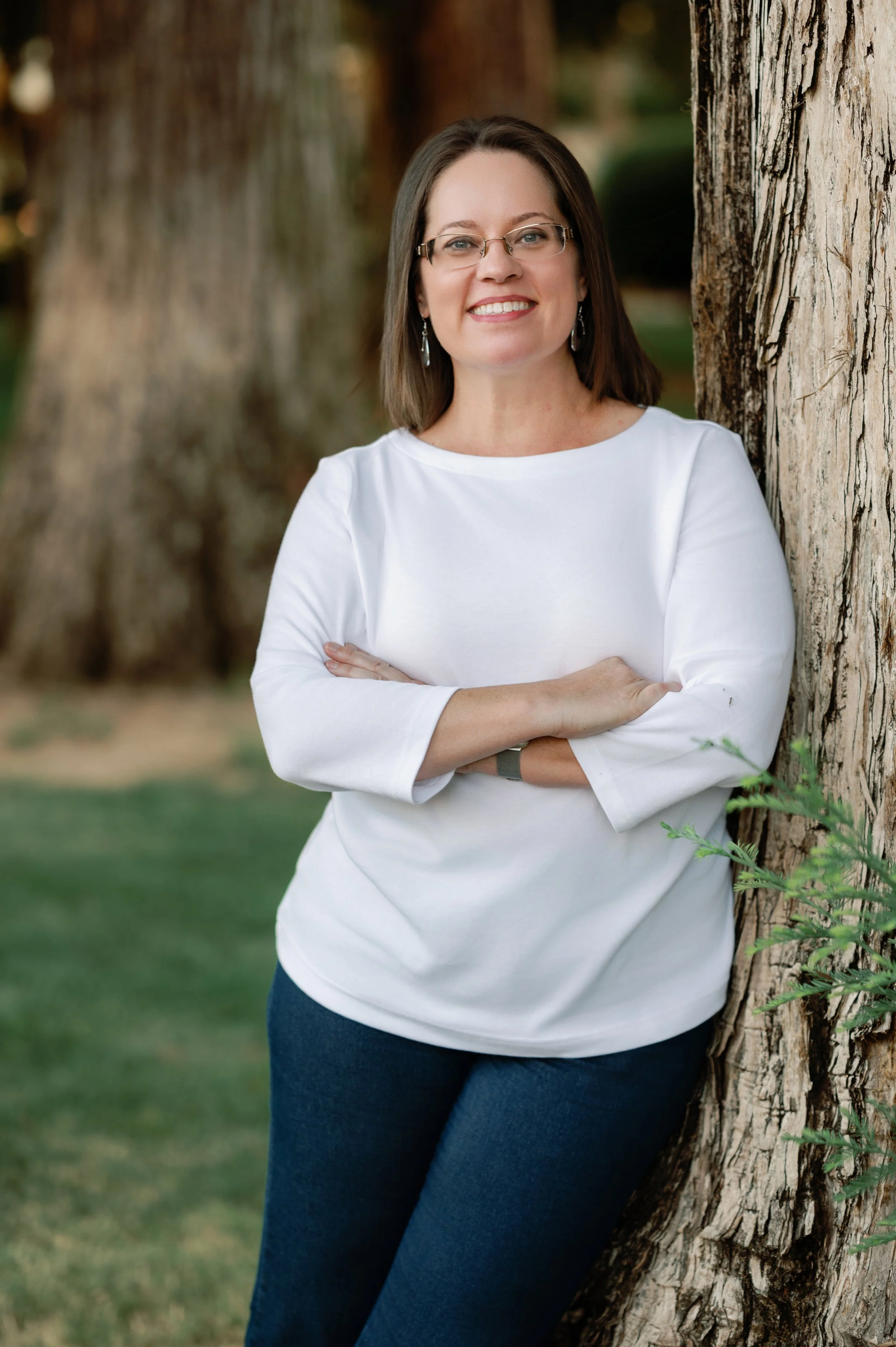
I worked in child welfare and adoptions for nine years before becoming a therapist. I sat with hundreds of families navigating the adoption system: birth families, adoptive families, and the children at the center of it all.
I'm C.A.S.E. trained (Center for Adoption Support and Education) and completed extensive training through the National Adoption Competency Mental Health Training Initiative.
I understand that you can love your adoptive family deeply and still grieve what you lost. That your adoption story isn't something to "get over" but something that keeps showing up at different stages of your life, and that's worth having support for. Integration looks different at 25 than it does at 40, and different again when you become a parent yourself.
I also understand that not all adoptees feel traumatized, and I won't assume that's your experience. Some people come to therapy wanting to explore adoption's impact on their life in a broader way. Others just need help with a specific decision like search or reunion.
Wherever you are, we start there.

Therapy Services Offered
Individual Weekly Therapy
Weekly therapy with me is a steady, collaborative space where you don’t have to perform, explain everything perfectly, or rush toward solutions. We’ll move at a pace that respects your nervous system, blending thoughtful conversation with evidence-based trauma approaches when helpful, so insight and relief can happen together. Some weeks may feel reflective and grounding, others more active and processing-focused—but always intentional and contained. Over time, clients often notice they feel more regulated, more confident in their responses, and less controlled by patterns that once felt automatic.
Intensives
Therapy intensives are longer, focused sessions designed to help you go deeper without the stop-and-start feeling of weekly therapy. In a 2- or 4-hour intensive, we create a carefully paced container that allows time for assessment, preparation, processing, and grounding—without rushing your system. These sessions often incorporate trauma-focused modalities such as EMDR, Brainspotting, IFS, or somatic work, with built-in breaks and regulation throughout. Clients often choose intensives when they want meaningful movement around a specific issue or feel ready for concentrated, intentional healing work. Learn more about intensives here.
Logistics
50-minute Sessions are $250.
I also offer 90-minute sessions for $375 and intensive sessions (2-6 hours) ranging from $500 to $1500 for people who want to work intensively.
I don't take insurance directly, but I can provide superbills for out-of-network reimbursement if your plan covers that.
I am available early mornings, evenings, and weekends. I provide services online only.

Self-Schedule or Contact Me Below
For the quickest and most confidential option, you’re encouraged to book directly into my calendar by clicking the Self-Schedule Here button below. That button will take you to my HIPAA-compliant calendar where you may request an appointment. Once I confirm your appointment request (typically within 24 hours), I will email you the new client forms to digitally sign. Then, we will meet on your scheduled day.
If you have questions prior to scheduling, you can also email me using the contact form below, and I’ll reply within 48 business hours. If you don’t see a reply, please check your junk/spam folder.
I look forward to hearing from you!
— Summer Verhines, LCSW
Contact Summer
Frequently Asked Questions
-
Yes. Research shows that even newborns form implicit (pre-verbal) memories of separation. This doesn't mean infant adoption is automatically traumatic for everyone, but it does mean that being adopted "early enough to not remember" doesn't erase the nervous system's response.
-
I do both. Sometimes the work is individual, focused on your own healing and processing. Other times it makes sense to bring in your partner, your adoptive parents, or your birth family members to work through something together. We can also move between the two as your needs change. Some clients start with individual sessions and later bring in a family member for a few sessions when a specific issue comes up.
-
This is maybe the most common thing I hear. You can have wonderful adoptive parents, a good childhood, and genuine gratitude, and still carry grief, questions, or complicated feelings. Acknowledging the hard parts doesn't negate the good parts. Both can be true.
-
Yes. Whether you're weighing whether to search, actively searching, preparing for contact, navigating a reunion (including rejection), or processing a reunion that happened years ago, this is work I do regularly. I can help you think through decisions, prepare for various outcomes, and process whatever happens.
-
Absolutely. DNA surprises have become one of the most common reasons people reach out. Whether you discovered biological relatives, found out you're not biologically related to who you thought, or uncovered other family secrets, this is a specific kind of shock that benefits from support.
-
I work with adoptive parents, adult adoptees, birth parents, and people grieving infertility and pregnancy loss. Each of these experiences creates specific kinds of grief and stress that general therapy often misses, so I've built my practice around them. All sessions are individual, not couples or family.
-
I'm licensed in California, Maryland, and Idaho, and all sessions are online.