
Online Therapy for Adult Adoptees in Irvine, CA
For adult adoptees sorting through identity, relationships, reunion, and grief. Serving Irvine, Tustin, Lake Forest, Mission Viejo, and surrounding Orange County communities.
Adoption-Competent Therapy in Irvine & Orange County
You grew up fitting in well enough on the surface, keeping your grades up in Tustin or Lake Forest or Mission Viejo, playing the right sports, saying the right things at family dinners. But underneath that performance, there was always a question you couldn’t resolve: how do you build an identity when you don’t know where half of it came from?
Maybe you’re one of the many transracial adoptees in Irvine, raised by white parents in a community with a large Asian-American population, and the dissonance has always been there. You look like the families at the 99 Ranch Market in Irvine, but culturally, you grew up in a world that didn’t reflect your face. Or maybe you’re Korean-American, adopted into a Korean family that expected you to carry traditions you feel disconnected from because the adoption itself created a gap nobody talked about.
Or maybe adoption feels like old news to you, something that happened, something you’ve dealt with, until a DNA test pulled up a biological parent in Laguna Beach, or a half-sibling in Costa Mesa, and now you’re sitting with information that changes your whole story. You haven’t told anyone yet because you don’t know how your adoptive family will react, and in a community where family harmony matters deeply, disrupting that feels dangerous.
You lie awake at night in your Aliso Viejo house running through scenarios: what if your birth mother doesn’t want to hear from you, what if she does, what if your adoptive parents feel replaced, what if opening this door changes everything and you can’t close it again. The questions cycle without resolving, and they’re starting to affect your sleep, your focus at work, and your patience with your kids.
Learn more about my approach to working with adult adoptees.
How body-based, adoption-competent therapy works

You can probably already explain your own reactions better than most people in your life could.
You know you pull away when someone gets close, you know you scan for signs that people are about to leave, and you know you've spent most of your life adjusting who you are to make sure you belong.
Understanding all of that hasn't changed the reactions, because they started before you had language for any of it, some of them before you had memory.
The therapeutic approaches I use are designed to reach the places where those early experiences are still running the show. You won't need to narrate every painful detail or relive your worst moments to make progress, and much of this work happens with reactions and feelings that don't translate neatly into words, the kind that live in your body's responses rather than in your conscious thoughts.
What clients describe after this work isn't that the memories are gone, because the adoption is still part of your story and always will be. What changes is that the old reactions lose their grip. The memory is still there, but it stops driving your decisions.
You can ask questions about your origins without the guilt telling you it means you're ungrateful for the family who raised you, you can let someone get close without your whole body bracing for the moment they leave, and you can sit with complicated feelings about your story without needing to shut them down or let them take over your entire week.
I've spent nine years inside the child welfare and adoption system and completed specialized training in adoption competency through C.A.S.E. (the Center for Adoption Support and Education) and the National Adoption Competency Mental Health Training Initiative.
That means I already understand the competing loyalties, the grief that sits right next to the gratitude, and the particular exhaustion of performing "fine" for people who need you to be okay with your story. So when you walk into a session, you can go straight to the thing that's keeping you up at night.
What to expect from our work together

You’re sitting at a family dinner in Rancho Santa Margarita, and your adoptive mother makes a comment about how “lucky” you were to be adopted, and instead of swallowing your response the way you have for twenty years, you say something honest. “I know that’s how you see it, and I appreciate everything you’ve given me. But I need you to know that I also lost something.” The conversation is hard, but you don’t spend the next three days in a shame spiral about having said it.
You take your daughter to the playground at Bill Barber Memorial Park in Irvine and a parent asks if she “gets her eyes from you,” and instead of the familiar jolt, you answer naturally. The question doesn’t ruin your afternoon.
You meet your biological half-sister for lunch in Dana Point, and you’re present for it instead of dissociating through the whole meal because the reality of sitting across from someone who shares your genetics is overwhelming. You can feel nervous and still stay in the room.
You stop saying yes to every social invitation in your Newport Beach circle because you’ve untangled the difference between wanting to be there and needing to be wanted. Your weekends open up. You’re less exhausted.
You’re in a meeting at work in San Clemente and your supervisor gives you critical feedback, and your body doesn’t flood with the old terror that criticism means you’re about to be discarded. You hear the feedback, respond to it, and move on with your day.
You fill out the family medical history section at your doctor’s office in Laguna Niguel, check “adopted,” and it doesn’t flatten you for the rest of the afternoon.
You make a decision about whether to meet a biological family member that your DNA test surfaced, and the decision comes from clarity rather than desperation or dread. You take your time with it. You talk it through with your partner, and the conversation is a conversation, not a crisis.
You notice that you’ve stopped reflexively apologizing at work in Lake Forest when you disagree with someone. You offer your actual opinion in a meeting and your voice is steady. Nobody leaves. Nobody thinks less of you. The fear of taking up space has loosened its hold.
Online therapy for adult adoptees in Orange County

Orange County is spread out, and finding an adoption-competent therapist locally is already difficult without adding a drive through Irvine traffic or across the toll roads to get there. Online therapy means you can access specialized care from your home in Mission Viejo, your office in Tustin, or a private room anywhere in Orange County.
All sessions are through secure telehealth, so you can work with me from your home in Irvine, Tustin, Lake Forest, Mission Viejo, Newport Beach, Laguna Niguel, Laguna Beach, Costa Mesa, Aliso Viejo, Rancho Santa Margarita, San Clemente, or Dana Point without adding another errand to your schedule.
I also see adult adoptees throughout Los Angeles and San Diego and all of California.
Who this works well for
I work with adult adoptees in Irvine and throughout Orange County from all adoption backgrounds: domestic infant, international, transracial, foster care, kinship, and late-discovery adoptees who found out through DNA testing or family disclosure. You don’t need to have had a difficult adoption to benefit from this work. Many of my clients had loving families and are still carrying unresolved questions, grief, or relational patterns connected to adoption.
This is a good fit if you’re processing a DNA discovery, weighing whether to search for birth family, navigating a reunion or its aftermath, noticing adoption-related patterns in your relationships or parenting, or carrying identity questions that have grown louder over time.
This may not be the right fit if you need help locating birth family members (I can connect you with search specialists), require medication management, or need immediate crisis stabilization.
Hello! I’m Summer
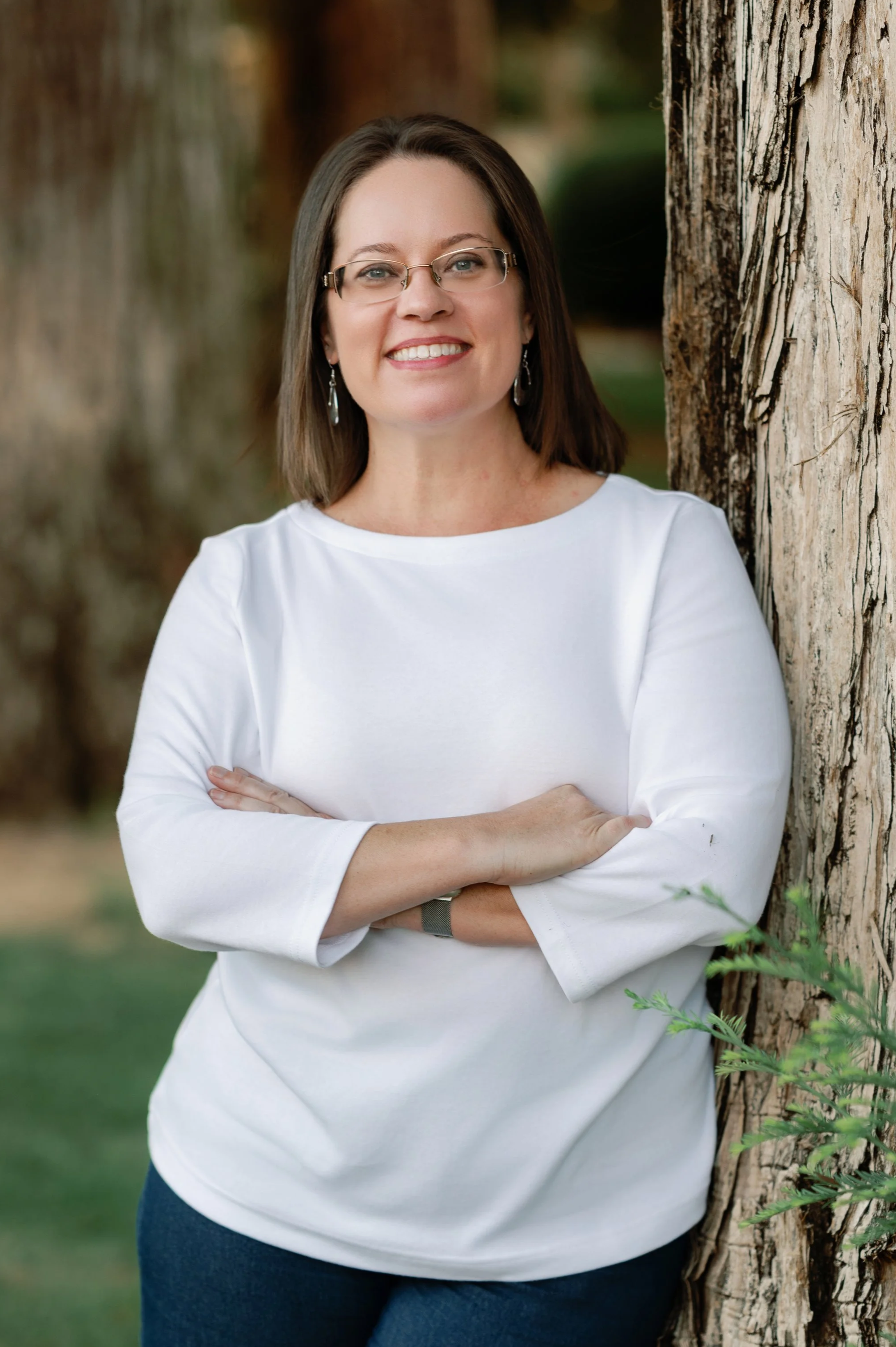
I worked in child welfare and adoptions for nine years before becoming a therapist. I sat with hundreds of families navigating the adoption system: birth families, adoptive families, and the children at the center of it all.
I'm C.A.S.E. trained (Center for Adoption Support and Education) and completed extensive training through the National Adoption Competency Mental Health Training Initiative.
I understand that you can love your adoptive family deeply and still grieve what you lost. That your adoption story isn't something to "get over" but something that keeps showing up at different stages of your life, and that's worth having support for. Integration looks different at 25 than it does at 40, and different again when you become a parent yourself.
I also understand that not all adoptees feel traumatized, and I won't assume that's your experience. Some people come to therapy wanting to explore adoption's impact on their life in a broader way. Others just need help with a specific decision like search or reunion.
Wherever you are, we start there.

Therapy Services Offered
Individual Weekly Therapy
Weekly therapy with me is a steady, collaborative space where you don’t have to perform, explain everything perfectly, or rush toward solutions. We’ll move at a pace that respects your nervous system, blending thoughtful conversation with evidence-based trauma approaches when helpful, so insight and relief can happen together. Some weeks may feel reflective and grounding, others more active and processing-focused—but always intentional and contained. Over time, clients often notice they feel more regulated, more confident in their responses, and less controlled by patterns that once felt automatic.
Intensives
Therapy intensives are longer, focused sessions designed to help you go deeper without the stop-and-start feeling of weekly therapy. In a 2- or 4-hour intensive, we create a carefully paced container that allows time for assessment, preparation, processing, and grounding—without rushing your system. These sessions often incorporate trauma-focused modalities such as EMDR, Brainspotting, IFS, or somatic work, with built-in breaks and regulation throughout. Clients often choose intensives when they want meaningful movement around a specific issue or feel ready for concentrated, intentional healing work. Learn more about intensives here.
Logistics
50-minute Sessions are $250.
I also offer 90-minute sessions for $375 and intensive sessions (2-6 hours) ranging from $500 to $1500 for people who want to work intensively.
I don't take insurance directly, but I can provide superbills for out-of-network reimbursement if your plan covers that.
I am available early mornings, evenings, and weekends. I provide services online only.

Self-Schedule or Contact Me Below
For the quickest and most confidential option, you’re encouraged to book directly into my calendar by clicking the Self-Schedule Here button below. That button will take you to my HIPAA-compliant calendar where you may request an appointment. Once I confirm your appointment request (typically within 24 hours), I will email you the new client forms to digitally sign. Then, we will meet on your scheduled day.
If you have questions prior to scheduling, you can also use the contact form below, and I’ll reply within 48 business hours. If you don’t see a reply, please check your junk/spam folder.
I look forward to hearing from you!
— Summer Verhines, LCSW
Contact Summer
Frequently Asked Questions
-
They’re deeply connected, and separating them rarely helps. Transracial adoptees carry a specific kind of identity complexity: growing up in a family that didn’t share your racial background means navigating cultural expectations, microaggressions, and questions about belonging in ways that are tied directly to the adoption. I work with transracial adoptees regularly and understand how race and adoption intersect, particularly in communities like Orange County where the demographics create unique dynamics.
-
That guilt is one of the most common things adult adoptees describe to me. The message, spoken or unspoken, that you should be grateful can make it incredibly hard to acknowledge that adoption also involves loss. Having loving parents and carrying adoption-related grief are not contradictory. Both can be true at the same time, and therapy can help you hold both without guilt dictating your decisions.
-
It depends on what you’re working on. Some clients come in focused on a specific situation, like processing a DNA discovery or navigating a reunion, and find 10 to 15 sessions gives them what they need. Others are working through patterns that have shaped their relationships and identity for decades and stay longer. We’ll check in regularly about how the work is going and when you feel ready to finish.
-
Sessions are $250. I’m a private pay practice, which means I don’t bill insurance directly. After each session, I provide a detailed receipt called a superbill that you can submit to your insurance company, and depending on your plan, they may reimburse you for a significant portion of the cost. You can call the number on the back of your insurance card and ask “do I have out-of-network mental health benefits?” to find out before we start.
-
No. You need to be physically located anywhere in California during our sessions, since my license (LCSW #68507) covers the entire state. I’m also licensed in Maryland and Idaho if you live in either of those states.