
Online Adoption Therapy for Birth Parents in Pleasanton and the Tri-Valley, CA
Grief counseling for birth parents who placed a child for adoption, whether it happened recently or decades ago. Serving Pleasanton, Dublin, San Ramon, Danville, and surrounding East Bay communities.
Specialized adoption therapy for birth parents in the Bay Area
You built a life on the other side of placement, moved to a new city, started a career, got married, had other children. And from the outside it looks like you moved on. But the placement didn’t move on with you. It’s still there, running underneath everything, and some days it takes more energy to keep it underground than you have left for anything else.
Maybe it surfaces at predictable times, your child’s birthday, Mother’s Day, the anniversary of the placement, and you’ve learned to brace for those. You go quiet for a few days, cancel plans, get through it, and then you’re fine again until the next one. Or maybe the triggers are less predictable. A pregnancy announcement from a friend that shouldn’t hurt this much but does. A child at the grocery store who’s the age yours would be now. Your partner asking why you’re distant and you can’t explain it because you’ve never told them.
Or maybe you did tell them, and they said the right things, but you could feel the distance afterward. The way they looked at you a little differently. The questions they didn’t ask. The sense that they filed it away as something from your past, when for you it has never stopped being part of your present.
Some birth parents reach out to me decades after placing their child, when the grief they thought would fade has only gotten heavier. Some reach out because a reunion is happening or falling apart, and the feelings that surfaced are bigger than they can manage alone. Some come because they’ve realized the patterns in their life, the relationships that don’t work, the way they hold their other children too tightly or can’t fully let themselves enjoy being a parent, all trace back to the same place.
Learn more about my approach to working with birth parents here.
Grief Lives in Your Body, Not Just Your Thoughts

You may have tried therapy before, and it may have helped you understand what you're carrying without changing how your body responds to it. That makes sense, because birth parent grief is different from other kinds of grief. The person you lost is alive. There's no funeral, no social permission to mourn, and no timeline where people expect you to still be hurting years or decades later.
And if you're in reunion, the grief doesn't go away just because you've found each other. It changes shape. The old loss mixes with new fears, new disappointments, and the complicated reality of trying to build a relationship with someone who is both your child and a stranger.
The approaches I use work directly with how grief and stress are stored in your body rather than asking you to talk your way through them.
The goal is to loosen the hold these responses have on your daily life so you can make decisions about reunion, contact, and your own future from clarity instead of from fear.
How Therapy for Birth Parents Helps With Grief

Your child’s birthday comes and you feel the sadness, but you don’t lose the week. You light a candle or look at the photos or do whatever you need to do that day, and the next morning you go to work, you’re present in your meetings, you pick up your other kids from school and help with homework, and the rest of the week looks like a normal week instead of something you have to survive.
You tell your partner what you’ve been carrying, and instead of the conversation you’ve rehearsed and dreaded for years, you say it simply. You get through the rest of the evening, you wake up the next morning and nothing has collapsed. You stop spending energy on keeping the secret, and you notice how much room that frees up, energy you start putting toward things you actually want, a class you’d been thinking about, a friendship you’d let go quiet, plans that used to feel like too much.
Your other child asks where babies come from, or your teenager asks why you get sad in October, and instead of deflecting or shutting down, you find words that are honest and age-appropriate, and your voice holds steady while you say them. The next time it comes up, you don’t dread it the same way, and you stop bracing every time your kid asks a question that gets close to the topic.
The promotion comes and you let yourself enjoy it instead of finding reasons to turn it down. You plan a trip with a friend, and you follow through instead of canceling at the last minute. You start saying yes to things you want and noticing that you’re allowed to have a life that feels good, that having a good life doesn’t erase what happened or mean you’ve forgotten.
Meet Summer
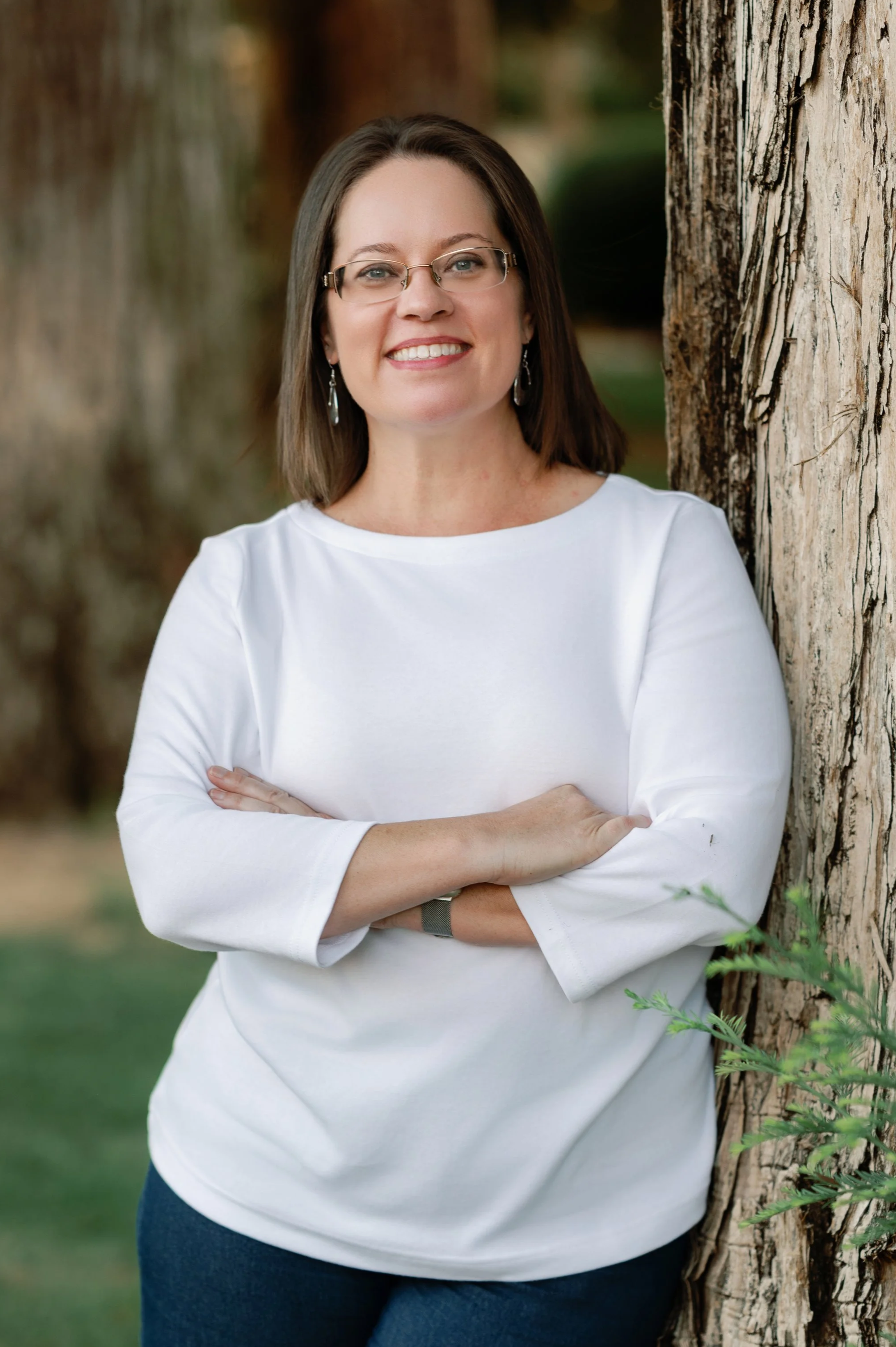
I spent nine years working in child welfare and adoption before becoming a therapist. During that time I supported birth parents through the placement process and saw firsthand how little follow-up support exists after the paperwork is signed. The agencies move on, the adoptive family’s needs take priority, and the birth parent is expected to go back to regular life as if something fundamental hasn’t changed.
That experience is why birth parents are a central part of my practice now. I am C.A.S.E. certified in adoption competency, which is a post-graduate training program that prepares clinicians to work with the lifelong effects of adoption on adoptive parents, birth parents, and adult adoptees.

Online Adoption Therapy for Birth Parents Across the Tri-Valley and East Bay Area
All sessions are conducted through secure, HIPAA-compliant telehealth. You can meet with me from a private room in your home, your car, or any quiet space with a stable internet connection.
The privacy of online sessions means you don’t have to explain where you’re going or who you’re seeing.
I work with birth parents throughout the Tri-Valley, including Pleasanton, Dublin, San Ramon, and Danville. I also serve clients in Livermore, Walnut Creek, Fremont, Castro Valley, Lafayette, Orinda, and surrounding East Bay communities.
Because sessions are online, I work with California residents statewide.
Therapy Services Offered
Individual Weekly Therapy
Weekly therapy with me is a steady, collaborative space where you don’t have to perform, explain everything perfectly, or rush toward solutions. We’ll move at a pace that respects your nervous system, blending thoughtful conversation with evidence-based trauma approaches when helpful, so insight and relief can happen together. Some weeks may feel reflective and grounding, others more active and processing-focused—but always intentional and contained. Over time, clients often notice they feel more regulated, more confident in their responses, and less controlled by patterns that once felt automatic.
Intensives
Therapy intensives are longer, focused sessions designed to help you go deeper without the stop-and-start feeling of weekly therapy. In a 2- or 4-hour intensive, we create a carefully paced container that allows time for assessment, preparation, processing, and grounding—without rushing your system. These sessions often incorporate trauma-focused modalities such as EMDR, Brainspotting, IFS, or somatic work, with built-in breaks and regulation throughout. Clients often choose intensives when they want meaningful movement around a specific issue or feel ready for concentrated, intentional healing work. Learn more about intensives here.
Logistics
50-minute Sessions are $250.
I also offer 90-minute sessions for $375 and intensive sessions (2-6 hours) ranging from $500 to $1500 for people who want to work intensively.
I don't take insurance directly, but I can provide superbills for out-of-network reimbursement if your plan covers that.
I am available early mornings, evenings, and weekends. I provide services online only.

Self-Schedule or Contact Me Below
For the quickest and most confidential option, you’re encouraged to book directly into my calendar by clicking the Self-Schedule Here button below. That button will take you to my HIPAA-compliant calendar where you may request an appointment. Once I confirm your appointment request (typically within 24 hours), I will email you the new client forms to digitally sign. Then, we will meet on your scheduled day.
If you have questions prior to scheduling, you can also use the contact form below, and I’ll reply within 48 business hours. If you don’t see a reply, please check your junk/spam folder.
I look forward to hearing from you!
— Summer Verhines, LCSW
Contact Summer
Frequently Asked Questions
-
The first session is a chance for me to hear what brought you here and for you to decide whether working together feels right. I’ll ask about your adoption experience, what’s been hardest, and what you want to be different. We won’t jump into the heavy stuff right away. For many birth parents, the first session is the first time they’ve talked about this with someone who already understands the weight of it, and that alone can bring some relief.
-
All three involve focusing on a specific memory or experience while your brain works through it in a new way. In EMDR, I guide your eyes back and forth while you hold a memory in mind. Brainspotting uses a fixed eye position to find where stress is stuck in your body. Accelerated Resolution Therapy uses guided imagery and eye movements and is designed to work in fewer sessions. None of these require you to describe painful experiences in detail out loud. Most clients say the experience is intense but manageable, and many notice a shift after just a few sessions. The memory is still there, but it doesn’t take over the way it used to.
-
No. Many of the birth parents I work with placed their child ten, twenty, or thirty years ago. Research shows that for many birth parents, the grief gets heavier over time rather than fading. Milestones like your child’s 18th birthday, becoming a grandparent, or your own health changing can bring the grief back to the surface with full force. There is no expiration date on this kind of work.
-
Yes. Open adoption was supposed to reduce birth parent grief by maintaining contact, but the reality is more complicated. Visits can be wonderful and devastating at the same time. Adoptive families sometimes pull back on contact over time. And seeing your child call someone else Mom or Dad, even when you expected it, can hit harder than you prepared for. Having contact doesn’t mean the grief goes away, it just changes shape.
-
Sessions are $250, private pay only. I do not accept insurance directly, but I provide superbills you can submit to your insurance company for possible out-of-network reimbursement. Many PPO plans reimburse a portion of the session fee. I recommend calling the number on your insurance card and asking about out-of-network mental health benefits before your first session.