
Online Therapy for Adult Adoptees in Santa Barbara, CA
For adult adoptees sorting through identity, relationships, reunion, and grief. Serving Santa Barbara, Goleta, Carpinteria, Montecito, and the Central Coast.
Someone asks where you’re from, and you give the easy answer. The one that matches your parents, your neighborhood, your accent. But there’s another answer underneath it, one that involves a story you didn’t choose and a history you might not fully know. You’ve been giving the easy answer your whole life, and lately you’re tired of how much energy it takes to keep the complicated one tucked away.
Maybe you took a DNA test and the results rearranged things you thought were settled. Half-siblings you didn’t know about. Medical history that changes what you thought you understood about your own body. An ethnic background that doesn’t match the family that raised you. You’re staring at a screen full of information and you’re not sure if you feel excited or sick or both.
Or maybe the search hasn’t started yet, and that’s the problem. You’ve been thinking about looking for your birth family for years, but every time you get close to doing something about it, you freeze. You don’t want to hurt your adoptive parents. You don’t know what you’d even say. You’re afraid of what you’ll find, or afraid of finding nothing at all.
Whatever brought you here, the common thread is this: something about your adoption is taking up space in your life in a way you can’t think your way out of anymore.
Learn more about how I work with adult adoptees here.
How body-based, adoption-competent therapy works

You can probably already explain your own reactions better than most people in your life could.
You know you pull away when someone gets close, you know you scan for signs that people are about to leave, and you know you've spent most of your life adjusting who you are to make sure you belong.
Understanding all of that hasn't changed the reactions, because they started before you had language for any of it, some of them before you had memory.
The therapeutic approaches I use are designed to reach the places where those early experiences are still running the show. You won't need to narrate every painful detail or relive your worst moments to make progress, and much of this work happens with reactions and feelings that don't translate neatly into words, the kind that live in your body's responses rather than in your conscious thoughts.
What clients describe after this work isn't that the memories are gone, because the adoption is still part of your story and always will be. What changes is that the old reactions lose their grip. The memory is still there, but it stops driving your decisions.
You can ask questions about your origins without the guilt telling you it means you're ungrateful for the family who raised you, you can let someone get close without your whole body bracing for the moment they leave, and you can sit with complicated feelings about your story without needing to shut them down or let them take over your entire week.
I've spent nine years inside the child welfare and adoption system and completed specialized training in adoption competency through C.A.S.E. (the Center for Adoption Support and Education) and the National Adoption Competency Mental Health Training Initiative.
That means I already understand the competing loyalties, the grief that sits right next to the gratitude, and the particular exhaustion of performing "fine" for people who need you to be okay with your story. So when you walk into a session, you can go straight to the thing that's keeping you up at night.
What changes for adult adoptees after adoption-focused trauma therapy

Someone asks about your background at a work event, and instead of the rehearsed deflection, you answer in a way that feels true. You don’t over-explain, you don’t perform. You say what you want to say and move on, and the conversation doesn’t take up the rest of your evening.
You write the email to the adoption agency, or to the biological relative you found online. The one you’ve been drafting in your head for months. You hit send. Your hands are shaking a little, but you don’t spiral afterward. You go about your day, and you check your inbox when you’re ready instead of every four minutes.
Your adoptive mother asks why you’re looking for your birth family, and you hear the hurt in her voice. In the past, this would have shut the whole thing down. You would have reassured her, dropped the subject, and swallowed your own needs. This time, you tell her you love her and that your search doesn’t change that. You feel the guilt, but it doesn’t run the decision.
You’re in a relationship and your partner wants to get closer, and you notice the familiar urge to pull back. But instead of going cold or picking a fight to create distance, you stay. You tell them you’re uncomfortable, which is new. The closeness feels hard, but you don’t sabotage it. You wake up the next morning and the relationship is still there, and so are you.
You stop saying yes to things you don’t want to do. Not in a dramatic way. You just notice that you’re making decisions based on what you want instead of what will make everyone else comfortable. You skip the family event that drains you without guilt-spiraling for three days. You take the weekend for yourself.
A coworker gets a promotion you wanted, and instead of the old story, the one that says you didn’t deserve it, that you’re not really good enough, that you have to work twice as hard to belong, you feel the disappointment and let it be disappointment, not evidence of something fundamentally wrong with you.
You fill out the family medical history form at a new doctor’s office and check “adopted” without the wave of frustration that used to follow. You note what you know, leave blank what you don’t, and it’s just a form.

Online therapy for adult adoptees in Santa Barbara and the Central Coast
I provide therapy for adult adoptees through secure, HIPAA-compliant video sessions. You connect from wherever you are in California, whether that’s your home in Santa Barbara, your office during a break, or anywhere you have privacy and a screen. No commute, no waiting room.
I work with adult adoptees throughout Santa Barbara County and the Central Coast, including clients in Goleta, Carpinteria, Montecito, Summerland, Santa Ynez, Solvang, Lompoc, and Santa Maria. I also serve clients in Irvine and Los Angeles.
Meet Summer
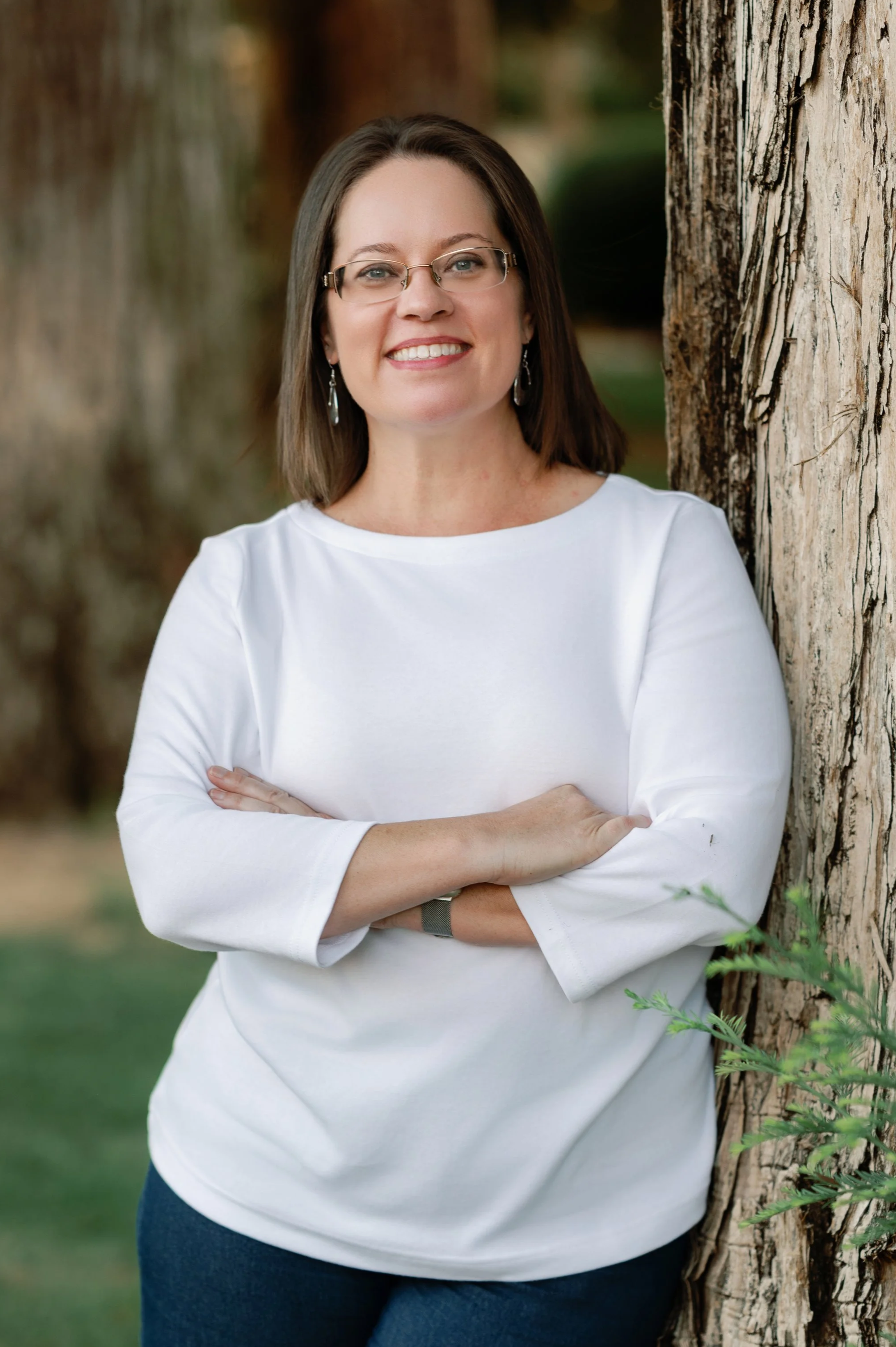
I worked in child welfare and adoptions for nine years before becoming a therapist. I sat with hundreds of families navigating the adoption system: birth families, adoptive families, and the children at the center of it all.
I'm C.A.S.E. trained (Center for Adoption Support and Education) and completed extensive training through the National Adoption Competency Mental Health Training Initiative.
I understand that you can love your adoptive family deeply and still grieve what you lost. That your adoption story isn't something to "get over" but something that keeps showing up at different stages of your life, and that's worth having support for. Integration looks different at 25 than it does at 40, and different again when you become a parent yourself.
I also understand that not all adoptees feel traumatized, and I won't assume that's your experience. Some people come to therapy wanting to explore adoption's impact on their life in a broader way. Others just need help with a specific decision like search or reunion.
Wherever you are, we start there.

Therapy Services Offered
Individual Weekly Therapy
Weekly therapy with me is a steady, collaborative space where you don’t have to perform, explain everything perfectly, or rush toward solutions. We’ll move at a pace that respects your nervous system, blending thoughtful conversation with evidence-based trauma approaches when helpful, so insight and relief can happen together. Some weeks may feel reflective and grounding, others more active and processing-focused—but always intentional and contained. Over time, clients often notice they feel more regulated, more confident in their responses, and less controlled by patterns that once felt automatic.
Intensives
Therapy intensives are longer, focused sessions designed to help you go deeper without the stop-and-start feeling of weekly therapy. In a 2- or 4-hour intensive, we create a carefully paced container that allows time for assessment, preparation, processing, and grounding—without rushing your system. These sessions often incorporate trauma-focused modalities such as EMDR, Brainspotting, IFS, or somatic work, with built-in breaks and regulation throughout. Clients often choose intensives when they want meaningful movement around a specific issue or feel ready for concentrated, intentional healing work. Learn more about intensives here.
Logistics
50-minute Sessions are $250.
I also offer 90-minute sessions for $375 and intensive sessions (2-6 hours) ranging from $500 to $1500 for people who want to work intensively.
I don't take insurance directly, but I can provide superbills for out-of-network reimbursement if your plan covers that.
I am available early mornings, evenings, and weekends. I provide services online only.

Self-Schedule or Contact Me Below
For the quickest and most confidential option, you’re encouraged to book directly into my calendar by clicking the Self-Schedule Here button below. That button will take you to my HIPAA-compliant calendar where you may request an appointment. Once I confirm your appointment request (typically within 24 hours), I will email you the new client forms to digitally sign. Then, we will meet on your scheduled day.
If you have questions prior to scheduling, you can also use the contact form below, and I’ll reply within 48 business hours. If you don’t see a reply, please check your junk/spam folder.
I look forward to hearing from you!
— Summer Verhines, LCSW
Contact Summer
Frequently Asked Questions
-
Adoption-focused therapy is built around the specific ways that early separation and growing up in a family that isn’t biologically connected to you shape identity, relationships, and self-worth. My C.A.S.E. certification and nine years in child welfare mean I understand adoption from the inside, including the things adoptees are often told (and not told), how records and searches work, and the complicated loyalty dynamics that come with wanting to know where you came from. You don’t have to start from scratch explaining why this matters. I already get it.
-
All three approaches work with your body’s stress response rather than relying only on talking through your experience. In EMDR, I’ll guide your eyes to follow a specific pattern while you hold a difficult memory or feeling in mind. You might notice the emotional weight of something getting lighter over the course of a session. Brainspotting uses your eye position to find where your brain holds stress, and you process from that point. ART combines elements of both and tends to move quickly. None of these require you to retell your story in detail, which many adoptees find important since the story itself may have gaps you can’t fill.
-
Having loving adoptive parents and having complicated feelings about being adopted can both be true at the same time. Many of my clients had stable, caring families growing up and still find that adoption has shaped their relationships, their sense of identity, or their ability to trust in ways they want to understand better. You don’t need to have had a bad experience to benefit from working through what adoption means in your life.
-
Yes. I work with adoptees at every stage of the search and reunion process, from deciding whether to search at all, to managing the emotional weight of what you find, to navigating contact with biological family members. I can also help you work through the feelings that come up around your adoptive family’s reaction to the search, which is often one of the hardest parts.
-
I provide all sessions through secure, HIPAA-compliant video. Many adoptees prefer online therapy because of the privacy and flexibility it offers. My clients consistently report that the virtual format feels just as connected and effective as in-person work.
-
Sessions are $250. I’m a private-pay therapist, which means I don’t contract with insurance companies directly. I do provide superbills, which are detailed receipts you can submit to your insurance for potential out-of-network reimbursement. Many of my clients recover a significant portion of the session cost this way. I recommend calling the number on the back of your insurance card and asking about your out-of-network mental health benefits before your first session.